Technical Specifications and Features of Apple TV (1st Gen) Revealed: Decoding Apple's Original Living Room Vision
Long before we streamed 4K HDR movies with a tap or asked Siri to find our favorite show, Apple quietly launched a device that would lay the groundwork for its ambitious future in home entertainment. It was a digital trailblazer, an unassuming silver box that asked us to rethink how we consumed media on our televisions. We're talking, of course, about the original, first-generation Apple TV.
For many, the mention of "Apple TV" conjures images of sleek black boxes, Siri Remotes, and an App Store full of streaming services. But the inaugural model, the A1218, was a very different beast. Understanding the Technical Specifications and Features of Apple TV (1st Gen) isn't just a trip down memory lane; it's an essential look at Apple's foundational steps into the living room, revealing a fascinating blend of ambition, compromise, and forward-thinking design that set the stage for everything that followed.
At a Glance: The First Apple TV in a Nutshell
- Brainpower: A surprisingly robust 1 GHz Intel processor.
- Visuals: An Nvidia GPU with 64 MB of dedicated memory.
- Memory: 256 MB of RAM, modest by today's standards.
- Storage: Offered in 40 GB or 160 GB IDE hard drive configurations.
- Core Function: Originally a media extender for iTunes, later evolved into a standalone device.
- Key Ports: HDMI, Component video, RCA audio, Ethernet, USB 2.0 (service only).
- Operating System: Based on a modified version of Mac OS X Tiger.
- Modern Utility: Largely obsolete for mainstream streaming services due to security and software limitations, but a fascinating piece of tech history.
A Blast From the Past: Apple's Early Forays into Living Rooms
The first Apple TV didn't emerge from a vacuum. Apple had flirted with the idea of integrating with the television set for decades, often with mixed results. In 1993, there was the Macintosh TV, a quirky all-in-one computer with a built-in TV tuner, but it sold fewer than 10,000 units. Then came the Apple Interactive Television Box in 1994, a collaborative effort that never saw public release, and the Apple Pippin in the 1990s, a short-lived home game console and networked computer.
These early attempts, while commercially unsuccessful, demonstrated Apple's persistent interest in the living room. They were experiments, learning opportunities that would eventually inform the strategy behind the Apple TV. When Steve Jobs unveiled the device in 2007, it wasn't just a product launch; it was the culmination of years of quiet ambition, refined and refocused for the burgeoning digital age.
The Original "iTV": Birth of a Media Player
The genesis of the first Apple TV is a tale of evolving vision and even a trademark dispute. Initially announced by Steve Jobs as "iTV" on September 12, 2006, it promised to bridge the gap between your iTunes library and your television. However, a trademark conflict with the British broadcaster ITV led to a swift rebranding. By its official unveiling on January 9, 2007, and subsequent release on March 21, 2007, it was formally known as Apple TV.
This device, bearing the product ID A1218, represented Apple's most serious and successful push into the home entertainment sector at the time. It wasn't designed to replace your cable box or become a gaming console; its primary purpose was to act as a digital media player, receiving content and pushing it to your TV. It featured no integrated controls, relying instead on a familiar white Apple Remote. The device remained on sale until September 1, 2010, marking a significant, albeit sometimes overlooked, chapter in Apple's hardware history.
Under the Hood: Technical Specifications That Defined an Era
To truly appreciate the first Apple TV, we need to dive into its core components. While its specifications seem quaint by today's standards, they were robust for a consumer media device of its time, designed to handle high-definition video (albeit upscaled) and complex media tasks.
Processor & Graphics: Powering the Experience
At its heart, the 1st generation Apple TV housed a 1 GHz Intel processor. This was a significant choice, reflecting Apple's recent transition from PowerPC to Intel chips in its Mac line. This x86-based architecture made the device surprisingly versatile, as we'll explore later.
Complementing the CPU was a dedicated Nvidia GPU with 64 MB of memory. While not a powerhouse gaming chip, this GPU was more than capable of rendering the device's user interface, decoding video streams, and handling photo slideshows with fluidity. For a media player in 2007, having dedicated graphics was a clear advantage, ensuring a smoother visual experience than many competing devices.
Memory & Storage: The Digital Vault
The original Apple TV was equipped with 256 MB of RAM. This amount of memory was sufficient for running its Mac OS X-based operating system and handling active media playback. However, it's a stark contrast to modern streaming boxes which often feature gigabytes of RAM to juggle multiple apps and high-resolution content simultaneously.
Perhaps the most distinctive hardware feature of the 1st Gen Apple TV was its internal hard drive. It initially shipped with a 40 GB IDE drive on March 21, 2007. Just a few months later, on May 31, 2007, a larger 160 GB IDE model was introduced, offering significantly more space for synced content. This hard drive was central to its original functionality: it wasn't just a streaming device; it was also a local media server, capable of syncing and storing movies, TV shows, music, and photos from a paired iTunes library. The 40 GB model was eventually discontinued on September 14, 2009.
Connectivity & Ports: Bridging the Gap
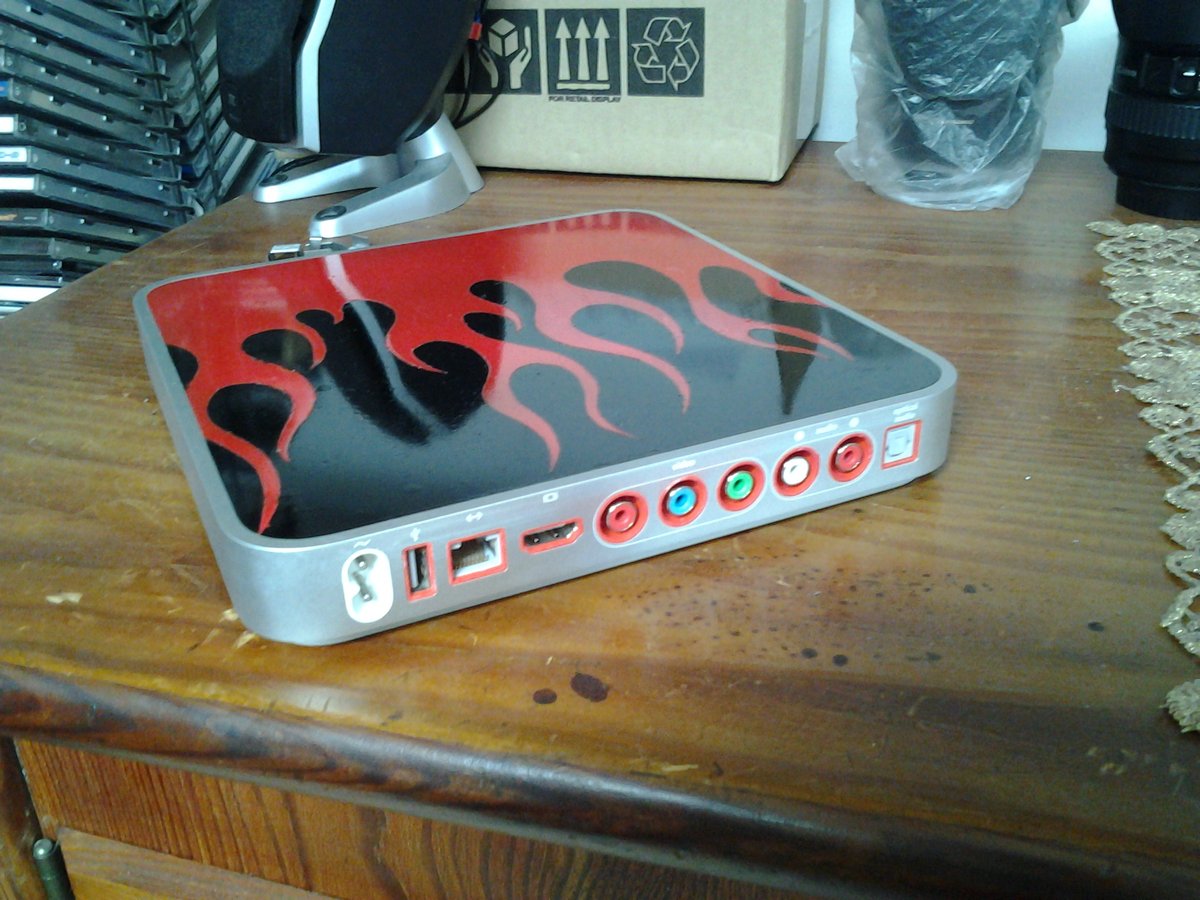
The 1st-generation Apple TV offered a comprehensive suite of ports, reflecting the diverse home theater setups of the late 2000s:
- Power: A standard power input.
- USB 2.0: Crucially, this port was designated for "service use only" by Apple, meaning it wasn't intended for user-expandable storage or direct media playback from USB drives. This limitation would, however, later become a gateway for modders.
- Ethernet: A vital port for a stable, wired network connection, especially important for large media file transfers and reliable streaming.
- HDMI: The digital standard for high-definition video and audio, connecting directly to modern (for the time) TVs.
- Component Video: A set of three RCA jacks (red, green, blue) for analog high-definition video, catering to TVs that predated widespread HDMI adoption or lacked sufficient HDMI inputs.
- RCA Audio (Red & White): Standard analog stereo audio outputs, ensuring compatibility with older receivers and sound systems.
This blend of digital and analog outputs showcased Apple's understanding that not all users had cutting-edge home theaters, providing broad compatibility right out of the box.
Operating System: Mac OS X's Living Room Debut
Running on Apple TV Software 1.0 to 3.0.2, the 1st generation Apple TV was powered by a modified version of Mac OS X 10.4.7 Tiger. This foundation was significant; it meant the device was, in essence, a small, purpose-built Mac. This underlying power and flexibility would become a key factor in its later appeal to enthusiasts and hackers.
The software presented a custom interface, initially resembling Apple's "Front Row" media center application found on Macs, designed for easy navigation with the included Apple Remote.
Software Evolution: From iTunes Sidekick to Standalone Hub
The life of the first Apple TV was marked by several pivotal software upgrades that fundamentally changed its functionality and user experience.
Initial Vision (Software 1.0): The iTunes Extender
When the Apple TV first launched, it was primarily conceived as an extension of your computer's iTunes library. Its initial software required a computer running iTunes to stream or sync content. You would manage your media on your Mac or PC, and the Apple TV would either stream it over your network or copy it to its internal hard drive. This made it less of a standalone device and more of a "media bridge."
The "Take 2" Revolution (January 2008): Unleashing Independence
The most significant transformation occurred on January 15, 2008, with the release of the "Take 2" software upgrade. This update dramatically redefined the Apple TV. It removed the requirement for a computer running iTunes, turning the device into a truly standalone media player.
With "Take 2," users could now:
- Directly rent and purchase content from the iTunes Store, eliminating the need to use a computer as an intermediary.
- Stream photos and download podcasts from MobileMe (Apple's cloud service at the time).
- Experience a brand-new interface organized into six intuitive categories: movies, TV shows, music, YouTube, podcasts, and photos, alongside "Settings."
This update was a game-changer, foreshadowing the shift towards direct-to-device streaming that dominates today's media landscape.
Refinements and Remote Control
Subsequent software updates continued to enhance the experience:
- Apple TV Software 2.1 (July 10, 2008): Added support for iPhones and iPod Touches running Apple's new Remote app, providing an alternative and more versatile control method.
- Apple TV Software 3.0 (October 2009): Introduced another interface overhaul, featuring seven horizontal columns, improved content filtering, access to iTunes Extras, and Internet radio.
These updates incrementally improved the user interface and expanded content options, keeping the device relevant for a few more years before newer hardware generations arrived.
The User Experience Today: A Nostalgic Artifact
While the 1st generation Apple TV was a pioneer in its time, its utility in the modern streaming world is extremely limited. If you stumbled upon one in an attic or a thrift store, here's what you'd encounter:
Service Discontinuations: The March of Obsolescence
Technology evolves, and older devices inevitably face obsolescence. Apple officially discontinued service and support for the 1st gen Apple TV on September 9, 2015. More critically for daily use:
- iTunes Store Access: Starting May 25, 2018, access to the iTunes Store for purchases and rentals was removed. This was due to obsolete security standards that could no longer protect user data for transactions. This means you can't buy or rent new movies or TV shows directly from the device.
- YouTube: Google also pulled support for YouTube on this device, meaning you can no longer stream videos from the platform.
Essentially, the device's ability to access online content from major providers has ceased, turning it into a charming, but mostly inert, relic for modern streaming needs. Its primary function would be playing any previously synced content from an ancient iTunes library, if you could even still pair it.
The Joy of Tinkering: Unofficial Customization
Despite its official limitations, the 1st-generation Apple TV holds a special place in the hearts of tech enthusiasts and hackers. Its Intel x86 architecture and Mac OS X foundation made it remarkably open to modification.
This robust platform allows for various unofficial customizations:
- Alternative Operating Systems: You can hack it to run Android (versions 2.2/4.0.4), full Linux distributions (often for media center software like Kodi), or even unsupported versions of Mac OS X (up to 10.5.5, albeit with some limitations like partial audio support).
- USB Booting & Drive Swaps: Modifications often involve booting from a USB drive or copying a custom image to its internal IDE hard drive. Some users even replaced the IDE drive with an SSD for faster performance.
For those willing to dive into the technical details, the original Apple TV transforms from an obsolete streaming box into a versatile, low-power media PC, capable of running modern open-source software like Kodi, giving it a surprising second life.
A Legacy Forged: Paving the Way for Future Generations
The first Apple TV, while a distinct product, laid crucial groundwork for Apple's continued presence in the living room. Its journey from a "hobby" project, as Steve Jobs famously called it, to a revenue-generating product category demonstrated the market appetite for curated, easy-to-use media experiences.
The transition from the 1st Gen to subsequent models highlights a continuous evolution:
- Shift to ARM & Flash Storage: The 2nd generation Apple TV (released September 2010) made a radical leap, ditching the Intel chip and hard drive for an ARM-based Apple A4 chip and 8 GB of flash storage. This made it smaller, quieter (fanless), and shifted its focus entirely to streaming rather than local storage. It also ran a variant of iOS, streamlining development.
- Higher Resolutions & App Store: Later generations, like the 3rd Gen (1080p video) and especially the 4th Gen (Apple TV HD, with tvOS and its dedicated App Store), further refined the experience, adding features like voice control (Siri Remote) and opening the platform to third-party applications. These changes built directly on the foundation of user interface design and content delivery established by the original.
The First generation Apple TV was instrumental in demonstrating the commercial viability of a dedicated media streaming device, even if its initial implementation was more about syncing.
Early Sales and "Hobby" Status
Despite Jobs' "hobby" moniker, the 1st generation Apple TV garnered significant attention. By January 2007, it had over 100,000 pre-orders, and sales predictions for its first year ranged from 1 to 1.5 million units. This wasn't a niche product; it was a clear signal that consumers were ready for simpler ways to access digital content on their TVs. Sales even tripled in Q4 2008 and Q1 2009, indicating growing momentum. This early success undoubtedly fueled Apple's continued investment in the platform, paving the way for the millions of units sold across subsequent generations. By March 2015, a total of 25 million Apple TVs (across all generations) had been sold.
Beyond the Box: Understanding Apple TV's General Features (Historically Applied)
While many of these features evolved significantly, the 1st Gen Apple TV established core concepts that define the Apple TV line:
- Content Playback: Fundamentally, it delivered video, music, and podcasts to your TV, setting the precedent for what a dedicated media player should do.
- Syncing/Streaming from iTunes: The 1st Gen uniquely focused on syncing content to its internal storage from one paired iTunes library while also allowing streaming from up to five computers. This approach eventually gave way to "Home Sharing" (2nd Gen+), which prioritized streaming from multiple libraries over a local network.
- Video Output: While it featured HDMI and could display 1080i/p for its UI and photos, the 1st Gen Apple TV primarily handled upscaled content. It couldn't play native 1080i/p video files, a capability that arrived with the 3rd generation.
- Audio: Even this early model supported 7.1 surround sound through its audio chip, with iTunes offering Dolby Digital 5.1 content.
- Control Methods: The included Infrared Apple Remote was the primary control method, but the 1st Gen's support for the Remote app on iOS devices (from Apple TV Software 2.1) foreshadowed the move towards more integrated and flexible control schemes.
- Accessibility: Early on, Apple ensured features like closed captioning were available, setting a standard for accessibility that would be expanded upon in later models with VoiceOver and Siri.
- Parental Controls: The ability to limit access to content by rating and require a PIN for purchases was present from the early days, demonstrating Apple's commitment to family-friendly consumption.
The Enduring Echo of Innovation
The 1st generation Apple TV, in all its silver, Intel-powered glory, was more than just a product; it was a statement. It marked Apple's definitive entry into the living room, a space they had circled for years. Its technical specifications—the Intel chip, the generous (for the time) hard drive, the versatile port selection—reflected a thoughtful design that balanced future potential with current compatibility.
While it has long since passed its prime for mainstream consumption, its legacy is undeniable. It was the device that taught Apple how to deliver digital media to the masses, how to evolve a product through software, and how to create an ecosystem that extends beyond the personal computer. For those who remember it, or for enthusiasts exploring the roots of modern streaming, the original Apple TV remains a fascinating, tangible piece of technological history—a testament to Apple's enduring ambition to transform every screen in our lives.